Showing posts with label Teochew food. Show all posts

Thursday, April 30, 2020

Nostalgic Snacks: Old School Tapioca Kueh

Old School Tapioca Kueh 
My grandma grew her own tapioca on her small farm. Every now and then, she would dig out some tapioca to make yummy treats for her grandchildren.

She would come up with many ways to cook the tapioca. We had boiled tapioca with shredded coconut and gula melaka. Sometimes, she would grate the tapioca to steam a tapioca cake. Then she cut the tapioca kueh into pieces and roll them in shredded coconut. Viola! It is another tasty snack.

Pan-fried Tapioca Kueh
Whenever there was leftover tapioca cake, she would cut them into squares and pan-fried them into crispy, golden brown snacks.

Missing my childhood days in a kampung. Glad that I could find tapioca even though I live in a bustling city. Cook this old school tapioca kueh for my family 😋😋

Old School Tapioca Kueh
Ingredients:
A
500 g grated tapioca
250 g water
6 tablespoonfuls sugar

To get a soft and creamy texture, I substitute the 250 g water with 100 g thick coconut milk and 150 g water.

B
Shredded coconut (steam together with pandan leaves and salt)
pandan leaves
pinch of salt

Old School Tapioca Kueh ingredients
1.   Lightly grease a tray and set aside.
2.   Add water to a pot and bring to a boil.
3.   Put all ingredients in a large bowl and mix well.
4.   Pour into the tray and steam for 30 minutes.
5.   Set aside the steamed tapioca cake and let it cool.

Old School Tapioca Kueh - preparation
6.   Add some to the shredded coconut, and steam it with cut pieces of pandan leaves.

7.   Cut the tapioca cake into pieces and roll them in the shredded coconut.

8.   Cut leftover tapioca cake into squares and pan fry it to a crispy golden brown.

Old School Tapioca Kueh 

Facebook Post:https://www.facebook.com/Ecltan/posts/2621202271485582

小时候的味道:古早味木薯糕

蒸木薯糕
童年时,跟阿嫲住在乡下。阿嫲自己种木薯,她时不时就会挖木薯来制做可口的糕点给孙子们吃。

木薯蒸一蒸,加椰丝或椰糖都好吃。把木薯磨成茸状,蒸个木薯糕,切片再沾椰丝,更加美味可口。

煎木薯糕
吃剩的蒸木薯糕,隔天再拿来煎一煎,又是另一种口味。

住在繁华城市里的我,这天给家人做这道简单又可口的古早味木薯糕 😋

古早味木薯糕
木薯糕食材
材料:
500 g 磨成茸状的木薯
250 g 水
6 大汤匙 白糖

椰丝 - 沾蒸好的木薯糕
斑兰叶


要木薯糕更软糯好吃,我把250 g 水换成 100 g 浓椰浆和150 g 水。

木薯糕做法
做法:
1.   蒸盘先抹一层油。
2.   锅里加水煮沸。
3.   把所有材料放入一个大碗中,搅拌均匀。
4.   倒入蒸盘,放入锅中蒸30 分钟。
5.   蒸熟的木薯糕放一边待凉。

蒸木薯糕
6.   椰丝加少许盐,和切小段的斑兰叶一起去蒸一下。
7.   蒸木薯糕切成块,沾椰丝吃。
8.   吃剩的蒸木薯糕,拿去煎一煎。


脸书页:https://www.facebook.com/Ecltan/posts/2621202271485582


Saturday, April 25, 2020

Traditional Teochew Snack: Soon Kueh

Teochew Soon Kueh

The traditional Teochew Soon Kueh uses bamboo shoots as filling. As it is not easy to find bamboo shoots in Singapore, you can replace them with turnips.

Teochew Soon Kueh (makes 30)

Skin ingredients:
200 g tapioca flour
200 g rice flour
80 g glutinous rice flour
750 ml boiling water
60 ml oil
salt to taste

Bamboo shoot filling:
2 bamboo shoot (or turnip) - shredded
2 carrots - shredded
black fungus - shredded
dried shrimp - chopped
minced garlic
shallots - chopped

Seasoning:
1 1/2 tbsp soy sauce
1 tbsp oyster sauce
1/2 tsp salt
1 tsp sugar
1 tsp ground pepper
3 tbsp water

Cooking method:
1) Heat oil, saute minced garlic, shallots and dried shrimps. Add shredded bamboo shoots, carrots and black fungus, fry until soft.

2) Add seasoning, continue to fry until slightly dry. Set aside to cool.

Teochew Soon Kueh

Making skin:
1. In a mixing bowl, put in the rice flour, glutinous rice flour, tapioca flour and salt to mix well.

2. Boil 750 ml of water, pour the boiling water into the mixture and stir quickly.

3. Add oil gradually and knead to form a smooth, flexible dough.

4. Sprinkle some tapioca flour on the table, divide the dough into portions of 30 g each. Cover with a damp cloth, set aside for 30 minutes.

5. Rub some tapioca flour on your hands, take a piece of dough and press it into a thin round shape. Put some filling in the middle.

6. Place some tapioca flour on your fingers to prevent the dough from sticking to your fingers when pinching the edges of the skin. Fold in half or roll into a ball.

7. Apply some oil on the steaming tray before placing soon kueh on it.

8. Bring water to a boil and steam for 8 minutes. Apply a layer of oil to soon kueh while hot to prevent the skin from hardening after cooling.


潮洲传统小吃:笋粿

潮洲笋粿

传统潮洲笋粿(30个)

粿皮材料:
200 g 木薯粉
200 g 粘米粉
  80 g  糯米粉
750 ml 沸水
  60 ml 油
盐少许

笋馅料:
2粒笋(可用沙葛),2条红萝卜,黑木耳 ----- 切丝
虾米,蒜末, 葱头仔 ----- 切碎

调味料:
1 1/2 汤匙 生抽
1 汤匙 蚝油
1/2 茶匙 盐
1 茶匙 糖
1 茶匙 胡椒粉
3 汤匙 水

笋馅料煮法:

1) 烧热油, 爆香蒜末、葱头仔及虾米, 加入笋丝、红萝卜丝、黑木耳炒软。

2) 加调味料, 继续翻炒均匀至微干, 盛起待冷。

潮洲笋粿

粿皮做法:
1. 粘米粉,糯米粉,木薯粉和盐搅拌均匀。

2. 750ml 水煮滚后,倒入粉中快速搅拌均匀。

3. 分次加入油,搓成有弹性的面团。

4. 桌面撒点木薯粉,面团分成每个约30克左右,放盘用湿布盖上,备用。

5. 手粘点木薯粉,把面团搓圆,压成薄片圆形,加馅料在中间,  再把内馅包起。

6. 手指粘点粉(以免揑时,面团粘在手指),把皮对折,捏紧边缘。

7. 蒸盘上先抹油,把包好的笋粿排入蒸盘。

8. 水滚,大火蒸 8分钟即可。趁热涂上一层油在笋粿上,以免皮变硬。


Thursday, March 26, 2020

White Wheat Porridge With Coconut Milk / Bubur Gandum


White Wheat porridge brings back fond memories of my childhood. It was a delicious sweet treat during my young days. My family was not well off. On Sundays. my father's rest day, he would give me a dollar and a tiffin box to buy white wheat porridge and dough crullers (you zha kueh). At that time, a dough cruller cost only 10 cents.

White Wheat porridge eaten with piping hot dough cruller is really delicious! We, kids, look forward to this afternoon tea snack every Sunday.

I like this delicious white wheat porridge so much that whenever I see it, I will definitely buy a bowl to satisfy my cravings.

I tried to cook it at home, but it was not easy to find the white wheat. Finally, I discover a small stall selling packed white wheat kernels in a wet market in Ang Mo Kio.

Now, whenever I crave for it, I will cook it myself.

White wheat is coarse grain, rich in fiber and vitamins. Singapore is hot and humid all year round, eating white wheat porridge often has the effect of reducing heatiness in the body and aids digestion. It is particularly beneficial for the elderly and the young.


Wheat Porridge Dessert
(makes two bowls)

Ingredients:
100g white wheat
100 g gula melaka
100 ml coconut cream
700 ml water
a pinch of salt
2 pandan leaves (knotted)


Method:
1.   Wash white wheat and soak overnight.

2.   Place knotted pandan leaves and water in a pot and boil.

3.   Add white wheat, lower heat to a simmer and cook until white wheat is tender.

4.   Add gula melaka, coconut milk and salt. Let it simmer for another 10 minutes.

5.   Remove from heat and serve warm with dough crullers (you zha kueh).

椰奶椰糖大麦粥


大麦粥可是我童年的美味小吃。小时候家里经济不好,星期天父亲没上班,午茶时间会给我一块钱和一个铁餐盒,让我去买大麦粥和油条。当时,一条油条才卖一毛钱。

大麦粥搭配热腾腾的油条,真是好吃!我们小孩子,每个星期天都期待这个午茶点心。

美味的大麦粥一直让我回味无穷。有看到就一定会买来吃。我想自己在家里煮,尝试在超市找食材,但是一无所获。最后在宏茂桥湿巴刹里一家卖杂粮的小档口才找到包装麦粒。

现在,任何时候想吃,就自己煮。

大麦属粗粮,富含粗纤维和维生素。新加坡常年是夏,喝大麦粥,有清火败热、消暑生津功效。

功效:帮助消化、补气宜中、去脂减肥。

椰奶椰糖大麦粥

食材:
100 g 麦粒
100 g 椰糖
100 g 椰奶
700 g 水
盐少许
两片斑斓叶


做法:
1.   麦粒先用清水洗干净,然后浸泡隔夜。

2.   把水和斑斓叶一起放入锅中煮沸。把浸泡后的麦粒放入锅中,转小火煮至麦粒软化。煮时要不时搅拌,免得锅底烧焦。

3.   加椰糖和椰奶,让这道糖水的味道更加浓郁。熄火。

4.   焖半个小时可以使口感更软滑。


Saturday, February 22, 2020

Traditional Snack: Handmade Mochi with Fillings


Delicious and easy desserts without using an oven.

Ingredients:
120 g glutinous rice flour
30 g corn flour
180 g milk
10 g butter
40 g fine sugar


Filling (your desired favorite): ground peanuts, shredded coconut, meat floss, black sesame, white sesame, mango, strawberry

Method:
1. Sift glutinous rice flour and corn flour into a mixing bowl. Add milk and sugar to mix well. Add melted butter and mix until smooth.

2. Place onto a plate, cover with cling wrap and steam for 15-20 minutes. Choose a larger plate for quick steaming. Poke the dough with a chopstick, if it comes out clean without dough sticking to it, it is cooked.

3. Remove when cooked and set aside to cool. Then knead with your hands until smooth. If the dough is sticky, you can add a little water.


4. Prepare your favorite filling, ground peanut, meat floss, mango or strawberry. Cut out the flesh of the mango, wash the strawberries and remove its stalk.

5. Take a small portion of dough and rolled it into a ball. Flatten it with your hand or roll into a thin circle with a rolling pin. Wrap the filling and seal.

6. Rolled in coconut shreds (optional).

Note: Mango mochi tastes better when chilled.

传统小食:手工包馅糯米糍

花生碎糯米糍
简单好吃,无需烤箱的甜点。

手工包馅糯米糍
(10 - 15 粒)

食材:
120 g  糯米粉
30 g    玉米淀粉
180 g  牛奶
10 g    牛油
40 g    砂糖

馅料(自己喜欢):花生碎、椰丝、黑芝麻、白芝麻、芒果、草莓

做法:
1.  筛过的糯米粉和玉米淀粉,加入牛奶和糖搅均匀。加入溶化的牛油搅拌至顺滑。

2.  倒入一个盘子,盖上保鲜膜,蒸15 - 20 分钟。选大一点的盘,才容易蒸熟。用筷子戳一下,不粘就是熟了。

3.  熟了取出,放一边,到糯米糍温热不烫手。然后用手揉均到光滑。觉得太粘,可以沾点清水。

4.  准备好喜欢的馅料、芒果或草莓。芒果切出果肉,草莓洗干净去蒂。

5.  取一小部分糯米糍揉成圆团,用手压扁或擀薄,包馅,收口。

6.  可以放在椰丝中滚一滚,沾满椰丝。


Sunday, December 22, 2019

Crystal Glutinous Rice Balls With Purple Sweet Potato Filling


I used the Teochew-style crystal skin method to make this chewy crystal glutinous rice balls. These crystal rice balls with purple sweet potato filling are not only pleasing to the eye, they are delicious too.

Ingredients:
100g purple sweet potato       
20g milk
200g tapioca flour
20g white sugar
boiling water

Method:
1) Peeled and steamed the purple sweet potato, then mashed into a puree.

2) Add the milk, knead well and divide into 10g purple sweet potato filling.

3) Mix tapioca flour and white sugar, add hot water while mixing with chopsticks. Be sure to use hot boiling water so the skin will be chewy.

4) Finally, use your hands to knead into a soft, non-sticky, smooth dough. Cover the dough for 20 minutes to keep it moist as tapioca dough is easy to dry out. If the dough becomes dry, add a little hot water and knead again.

5) Take 10g of dough (cover the rest of the dough to keep it moist) and roll as thin as possible, and put a purple sweet potato ball in the center.


6) Wrap the filling into a ball. Be careful not to trap air inside.

7) Cover the glutinous rice balls to prevent drying and cracking. Keep frozen when you can't finish cooking.

8) Put boiling water in the pot, put in the glutinous rice balls. Cook until the balls float. Close the lid for 4 minutes, and the skin will change from opaque to transparent. The last step is important, remember to keep the lid closed for a while to allow the skin to become transparent.

9) Boil water, add in white/brown sugar and pandan leaves. Put in the purple sweet potato crystal glutinous rice balls. Serve hot or cold.


紫薯水晶汤圆


用潮式水晶皮做法制成外皮Q弹软糯的水晶汤圆,和我们平时吃的糯米汤圆不同。晶莹剔透的紫薯水晶汤圆不止让人赏心悦目,也好吃。

食材:
紫薯               100g
牛奶                 20g
木薯粉           200g
白糖                 20g
开水适量

做法:
1)紫薯去皮切片蒸熟后,碾压成紫薯泥。

2)加适量牛奶  揉搓均匀,分成10g一个的紫薯馅。

3)木薯粉和白糖混合搅拌,边用筷子搅拌边加入热开水。一定要用热开水和面,皮才会Q弹。


4)最后用手和成柔软,不粘手,光滑的面团。盖保鲜膜20分钟保持面团湿度。木薯面团容易变干,随时注意保湿。如果面团变干了,就再加一点点热水再揉一揉。

5)取10g面团(其他面团依旧盖保鲜膜保湿)尽量擀薄,放一颗紫薯球在中央。

6)收口包好紫薯馅,搓圆即可。注意不要包进空气。

7)包好后要盖保鲜膜防止变干开裂。吃不完的放冷冻保存。

8)锅中烧开水后放入汤圆,煮至汤圆浮起后,关火盖锅盖焖4分钟左右,汤圆就会从半透明状变为完全透明状了。最后一步是关键,要记得焖一会,皮才会变透明。

9)调个糖水,把紫薯水晶汤圆放入。

Friday, December 20, 2019

Traditional Teochew Dessert: Lek Tau Suan


My family love this traditional Teochew dessert. The ones we bought outside have very few mung beans, dough fritters are skinny and few, too sweet and not fragrant! And it is too starchy! Price is also expensive!

I cook it whenever my son and elders crave for Lek Tau Suan. Using good quality ingredients, and with more mung beans in the soup, everyone wants to eat at least two bowls of Lek Tau Suan. My family is happy. Most important, I get to save money. Haha .....

Lek Tau Suan

Ingredients:

Split Mung Beans     250g (soaked and steamed)
Sugar                         your personal preference
Water                        2 Litre
Sweet potato flour / tapioca flour - 4 tablespoons mixed with water (according to personal preference, you can increase or decrease the amount of flour)
Pandan leaves

Method:

1) Wash the split mung beans and soak for 2 hours. Steam and set aside.

2) Boil water in a pot, add the pandan leaves and sugar. After the sugar has melted, remove the pandan leaves and gradually add in the mixed potato flour to the consistency you like.

To test for the right consistency, throw in a few kernels of mung beans. If they float, it's the right consistency. Add all the split mung beans and bring to a boil.


3) This dessert is great with dough fritters (you cha kueh).


传统潮州甜品: 绿豆爽


绿豆爽是我们家很爱吃的传统潮州甜品。 在外面买的豆爽,豆很少,油条又小又少,又甜,又不香!再来就是糊很多!价钱还贵!

自己在家煮,用品质好的食材,放多些豆,家人都吃得开心。重要是省钱。 哈哈

大家可以参考以下做法:

材料:

去壳绿豆仁 250克 (泡软蒸熟)
白糖 隨个人喜爱的甜度
清水 2000毫升
蕃薯粉/木薯粉 4 汤匙加水混合(随个人喜爱浓稠度增減薯粉)
斑兰叶

做法:
1) 绿豆仁洗浄,浸软, 蒸熟待用。

2) 煮热水加斑兰叶,加入白糖。糖煮溶后, 捞出斑兰叶, 把混合 的薯粉慢慢加入至你喜欢的浓稠度。要测试浓稠度,可以丢几 粒豆仁进去,如果浮起来,就可以。加入所有的绿豆仁, 煮沸 即可。

3) 搭配油条很赞。


Monday, June 24, 2019

Traditional Teochew Png Kueh

Teochew Png Kueh

These peach-shaped steamed glutinous rice cakes (Png Kueh) is a Teochew delicacy. In Chaozhou, they are also known as "red shell peach cakes".

In China, the peach is a symbol of longevity and immortality as it is considered a divine fruit of gods. The Teochews make these delicious cakes as prayer offerings, seeking blessings of health, wealth and longevity. Therefore, most of the moulds for making these traditional snacks are carved with the Mandarin word "寿" which means longevity.

When I was a young child, whenever there is a festival or joyous occasions, all the adult women in the family would gather by the large dining table to make png kuehs. We children would play next to them, playing with the dough, moulding it into various shapes.

For the Teochews, red png kuehs represent joy, while white png kuehs are offerings for our ancestors.

The stuffing in the png kueh is generally savory, with mushrooms, shrimps, peanuts, preserved radish, Chinese sausages, Chinese celery added to the steamed glutinous rice.

Another version of savory filling is the salty mung bean paste. As for the png kueh with sweet stuffing, it has red bean paste.

The following is my mother's traditional recipe for Teochew Png Kueh. 

Traditional Teochew Png Kueh

Makes about 20-24 pieces depending on the size of your mould.

Glutinous rice filling:
---------------------------
500 g glutinous rice
10 dried shiitake mushrooms
50 g dried shrimps
100 g fried peanuts (optional)
one piece Chinese sausage (optional)
Chinese celery (optional)
40 g preserved radish (optional)
4 large shallots (diced)
cooking oil

Seasonings:
-----------------
½ tsp salt
½ tsp sugar
1 tsp five spice powder
2 tbsp soy sauce
ground white pepper (to taste)
hot water

Preparing the filling:
-------------------------
The night before, wash the glutinous rice. Let the rice soak overnight. Soak mushrooms and shrimps in hot water until soften. Then diced the mushrooms. You might want to cut the dried shrimps into small pieces if they are big ones. Sliced Chinese sausage thinly.

Cook glutinous rice in a rice cooker.

Cooking the filling:
-------------------------
Heat wok, fry shallots with some cooking oil. Fry dried shrimps until fragrant, then add in diced Chinese sausage, preserved radish and mushrooms, Cook for about 3 mins. 

Remove from heat, stir in the cooked glutinous rice and mixed well. Add seasonings. Make sure glutinous rice is well mixed with seasonings. Stir in cooked peanuts and finely sliced Chinese celery.

Remove from wok and place into a pot. Do cover the rice with a damp cloth to prevent the glutinous rice from drying out. Let rice cool well before wrapping.

Skin - Ingredients:
-----------------------
500g rice flour, keep some for dusting
150g mashed sweet potato or tapioca flour
1/2 tsp salt
1/2 tsp sugar
600 ml hot boiling water
2 tbsp shallot oil, reserve some for brushing
a few drops pink food coloring

Making the skin:
---------------------
In a large stainless steel mixing bowl, combine the flour, sugar and salt. Set aside.

Boil the water. Stir the pink coloring into boiling water. The solution is pink. Pour boiling water into the rice flour mixture and mix quickly with a wooden ladle until a dough is formed. Add in mashed sweet potato here if you are using.

Next, use your hand to knead the dough until smooth, and it doesn't stick to the side of the mixing bowl.

Cover dough with a damp cloth to prevent the dough from drying. 

Making Png Kueh:
-----------------------
Lightly dust png kueh mould with rice flour, especially the grooves of the mould. Divide dough into 20 - 24 portions.

Flatten each portion of dough and press thinly into a large round with your fingers. Fill each round with some glutinous rice filling, seal and form into a peach-shape (triangle). Trim off any excessive dough. Place into the mould and press the kueh gently to fit into it.

Turn mould over and knock the png kueh onto a lightly floured tray. Place them on a steaming tray and steam for about 15 mins or until cooked. Don't over steam the kuehs or they will become gooey. 

Brush each freshly steamed png kueh with shallot oil. Serve with sweet dark soy sauce and sambal chilli.

If you still have leftover png kueh the next day, you can pan fried them with some oil. It will taste crispy and chewy.


Saturday, June 22, 2019

潮州南瓜芋泥白果

潮州南瓜芋泥白果

我母亲在世时,不时会煮美味的潮州芋泥。 我很庆幸向她学煮芋泥,现在家人任何时候想吃, 都可以享用这道传统潮州美食。

潮州芋泥的做法:

食材:
芋头
猪油(或椰油)
糖 (适量)
椰浆 (少许)
南瓜泥 (蒸熟)
白果 (包装白果,或者自己用糖水煮熟的)

1)芋头洗净,切片蒸熟,趁热压烂成泥。如果担心芋泥煮不滑,煮不烂,可以用食物搅拌器,把蒸好的芋泥打一遍再用。

2)热锅加入油,然后把芋泥倒入。为了不让芋泥那么干,而且比较顺滑,可以多加一些油来煮芋泥。

3)加入适量的糖,不停的搅拌、翻松。煮到可以顺利取起就可以了。

4)要吃的时候,淋上少许的椰浆,蒸熟的南瓜泥和白果一起享用。


Friday, December 09, 2016

Teochew Festival 2016 《潮州节2016》


Teochew Festival 2016 was officially opened by Minister for Health, Mr Gan Kim Yong this morning. Organised by Teochew Poit Ip Huay Kuan, the 10-day festival is held at Sands Expo and Convention Centre (Level 1, Hall A) from 9 to 18 Dec. Opening hours from 10.30 am to 9.00 pm daily.


Teochew opera lovers can watch daily performances by Xiaomeihua Opera Troupe from Jieyang and local arts group Nam Hwa Opera Limited.

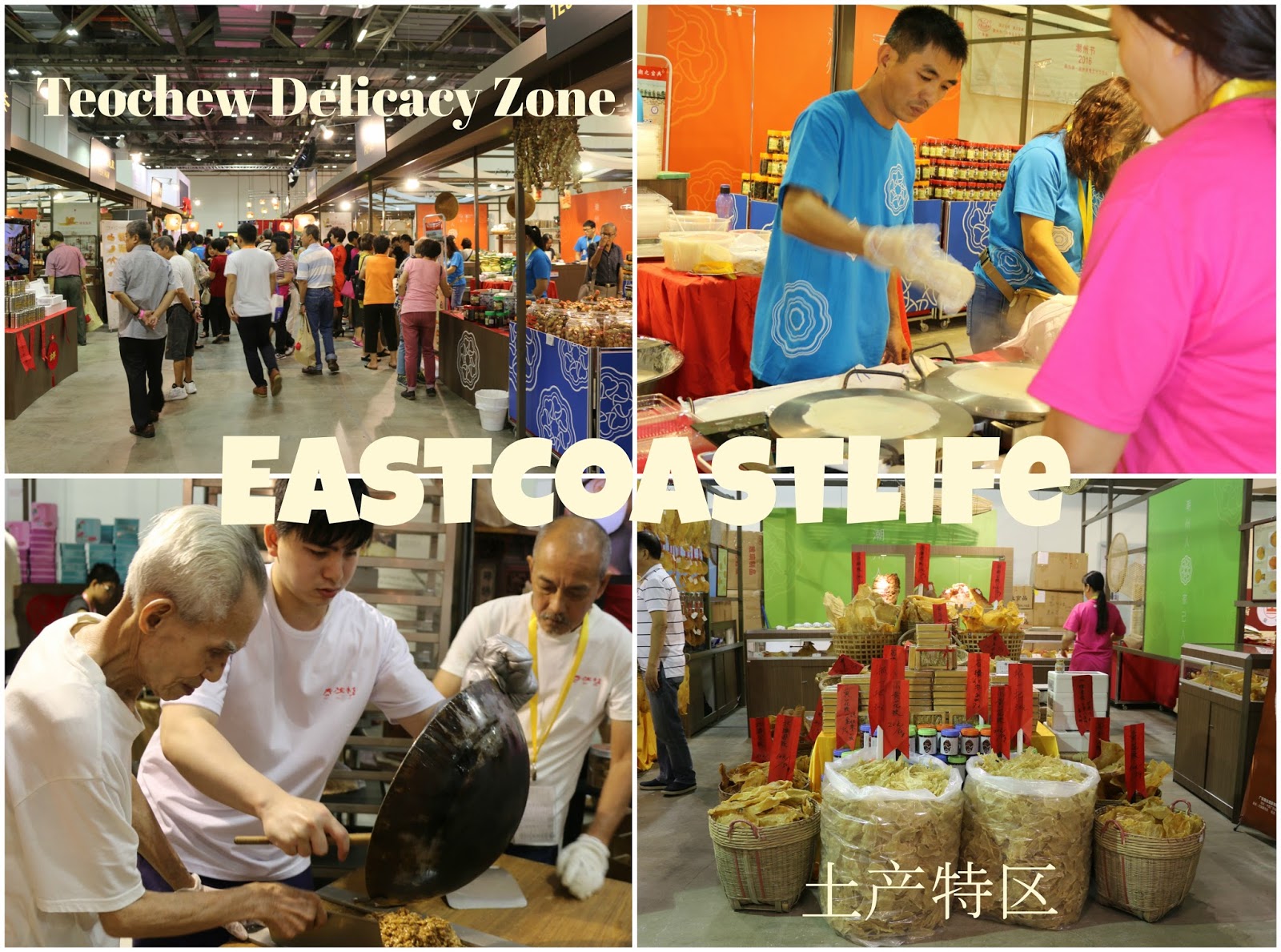
Besides watching cultural performances, visitors can explore the Cultural Gallery and 3 zones - Food Zone, and Teochew Delicacy Zone and Handicraft Zone.


At the Cultural Gallery where some of these artefacts are loaned from the Museum of Overseas Chinese Remittance in Shantou, I have a quick look at the history of the pioneer Teochew immigrants.


The most crowded place at the festival is the Food Zone. The small food street features 20 vendors comprising local Teochew eateries, as well as food vendors from Shantou and Chaozhou.

Teochew specialities such as bak kut teh, Teochew glutinous rice roll, soon kueh, bak zhang, crystal dumplings, fried kway teow with kailan, beef balls and fried oyster omelette are available daily.


At the Teochew Delicacy Zone, taste some tea and take a look at the large variety of fish maw brought in by a Shantou company.

Watch a peanut brittle demonstration by 77-year-old Master Chua who has more than 60 years of experience making traditional Teochew snacks.

Then there's the delicious teng cang popiah (Teochew sweet spring roll) which cost S$10 for 3 rolls!


At the Handicraft Zone, I watched a live demonstration of oil paper lantern by master craftsman Mr Tan who is from Chenghai. Also on display are the beautiful, golden silk embroidery works and exquisite wood carvings.

To encourage cashless transactions, only NETS payment is accepted at the fair.

Entrance tickets are priced at $10 each. The ticket holder can enjoy a $3 rebate when they make purchases at the Food Zone and Teochew Delicacy Zone.

I didn't make any purchases at this festival because the products sold are too expensive and they do not captivate me, including the Teochew food. Entrance fees to the festival doubled this year, I was expecting a better event with more interesting vendors but it is really disappointing. I bought 2 tickets but used only one. It's not worth paying S$10 if you only want to have a look-see.

《潮州节2016》

新加坡潮州八邑会馆呈现每天七场的潮剧、音乐和艺术表演,由揭阳小梅花艺术团、汕头潮乐团、一指团体、南华儒剧社等带给大家的表演。

文化馆 - 部分展品特地向中国汕头侨批文物馆商借展出。

潮州节场区主要分美食区、手工艺区、土产特区、主舞台以及文化馆。

美食区 - 20个摊位的美食街让大家品尝道地的潮州小吃 : 潮汕灌煎、潮州鸭母捻、潮州牛肉丸、蚝烙等。

土产特区 - 有摊位示范潮州功夫茶道、制作糖葱薄饼、潮州花生糖等。

手工艺区 - 展览髹金漆木雕、潮州刺绣、制作潮州灯笼、工艺陶瓷制作等。

潮州节会场只能通过 NETS 付费。没有NETS卡的朋友可以在潮州节购买限量版【潮州人家己人】现金卡。

新加坡潮州节@金沙会议展览
2016年 12月9日至18日,
早上10时30分至晚上9时
S$10 admission fee 入门票

Wednesday, September 28, 2016

Old School Breakfast @ Kai Juan Coffeshop 古早味早餐在佳园茶室


Received an early morning call from foodie friend Angie to have breakfast together. I was given a choice of Hakka yong tau foo at Balestier Road or Hainanese curry rice at Beo Crescent. I picked the former and took a bus down to the venue after calling hubby to join us.


Kai Juan Coffeeshop, this old corner coffeeshop was located on Balestier Road, along the same road as the famous Boon Tong Kee chicken rice shop.

I spoke to the coffeeshop assistant who told us that their shop has not undergone much change for the past 40 years.  

There are three food stalls in this coffeeshop. All of them have been operating for more than 20 years.   


We came specially for this Hakka yong tau foo (德志客家酿豆腐) manned by an old couple in their late 70s. The stall was started by the wife in 1976. The man was a teacher who has since retired and now helps his wife at the stall.

These pioneer generation hawkers are very hardworking, They come to work at 3 am to prepare the food and start selling at 7 am. They close at 2 pm. Wow. That is almost 12 hours of back breaking hard work for this old couple!

The couple didn't want to speak to us initially, but the wife opened up when she saw us bantering with the men from the bak kut teh stall.

At the couple's stall, we saw several pieces of yong tau foo immersed in a basin of broth. Angie told us that this is the old school style of selling yong tau foo in the old days.


My hubby ordered a bowl of yong tau foo with vermicelli (dry) and requested for chilli paste to be added to it. Oh boy, the chilli paste was spicy! The meal cost only S$3 and the lady boss gave him free veggies. hehehe.....

Angie had yong tau foo soup and a bowl of noodles (dry). Her meal cost S$3.50. She couldn't help giving hubby a hard stare when he started bragging that he got his meal cheaper because of his good looks. LOL

We like the broth which tasted deliciously sweet with the flavour of fish, pork and veggies.


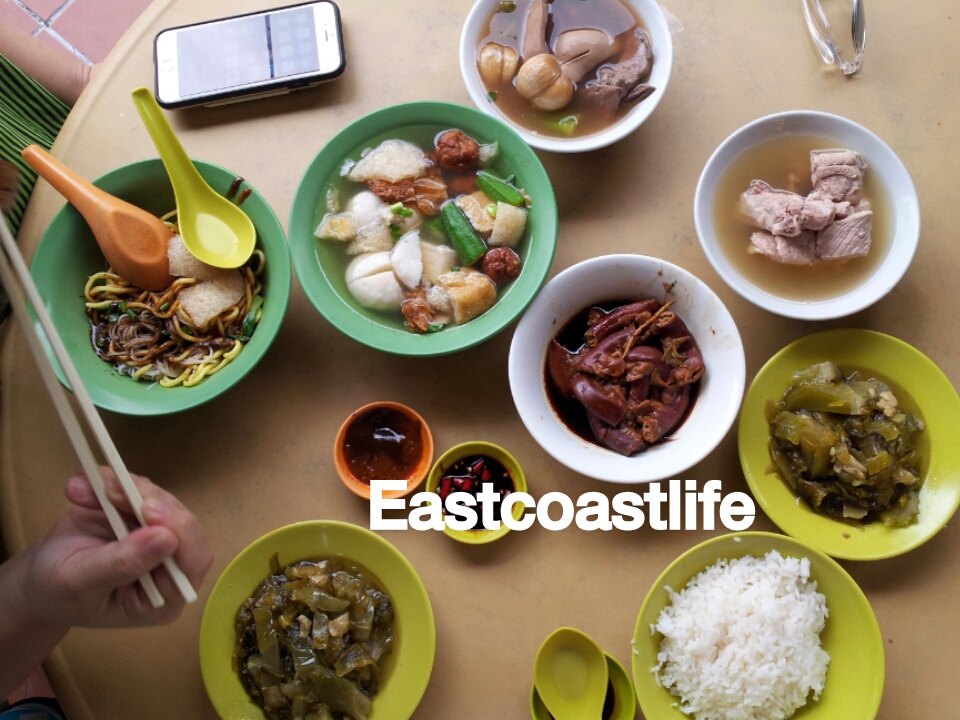
Angie and I ordered some dishes from Ah Hak Bak Kut Teh. Their Teochew style pork rib soup is clear, has lots of garlic and pepper in it. I ordered a bowl of pork rib soup (S$6.50) with steamed rice and a mustard green side dish (S$2). The soup was tasty but the vegetable was too salty for my taste.


 Angie chose braised pig intestines (S$6), a bowl of pork liver and kidney soup (S$6). Both Teochew men were friendly, attentive and came to top up our soup.


I ordered an iced milk tea and bought Angie a cup of coffee from the beverage stall. Angie was happy with her coffee as it was aromatic and thick. Apparently they use good quality coffee powder.

After a satisfying meal, we boarded bus number 131 to go to Middle Road.


早上, 贪吃一号安琪约了我到馬里士他路的佳园茶室吃古早味客家酿豆腐。这里的酿豆腐是泡在汤里让我们挑选的。我尝了一口汤头。。。 很赞! 他们的辣椒酱就太辣了!

摊主是70多岁的阿嫲, 她和退休教师的丈夫每天清晨3点到咖啡店制作酿豆腐, 7点开摊, 下午2点收摊。他们每天工作十多个小时, 真辛苦。他们的食物价钱不贵, 阿嬷亲手制作的客家酿豆腐很美味。

德志客家酿豆腐
营业时间 :早上 7am 到下午 2pm

我们还叫了肉骨茶、猪肝猪肾汤、滷粉肠、搭配菜尾来吃。肉骨茶汤还不错, 不过菜尾太咸。

亚合肉骨茶是老字号, 售卖道地潮州式肉骨茶30多年了。售卖肉骨茶的两位潮州兄服务好, 很健谈, 会自动为我们加汤呢。

 营业时间 :从早上6点开到午夜2点


Saturday, September 24, 2016

Cheng Tng - Teochew dessert 潮州甜品 - 清汤


The hot weather plus a heavy workload is affecting my health. The past couple of days, I am having poor digestion and a sore throat.

Looking through my cherished stash of Chinese ingredients, I decided to make a pot of cheng tng for my family. This light and refreshing Teochew dessert will cool off the body. On a hot day, a bowl of chilled cheng tng is a fabulous thirst quencher.

For my son who would only drink the sweet soup, I will keep a chilled bottle of it in the fridge.


My platter of basic ingredients (anti-clockwise) :

white fungus
dried red dates
candied winter melon strips
dried longans
barley
rock sugar
malva nut (centre)

Boil 2 litres of water and put all these ingredients to cook for half an hour. You can either drink it warm or cold.

There is no fixed rule on what you want to put in your pot of cheng tng. You can add ingredients that you like.


Malva nut (Sterculia lychnophora Hance) is known as :
Pang da hai (胖大海) in Chinese
Pong dua hai in Teochew
kembang semangkuk in Malay
Niranjan Phal or China Phal in Hindi.

The malva nut is commonly used in Chinese medicine to clear and sooth throat. Teachers and singers who have to use their voices a lot will drink a tea make from it to preserve their voice.


Soak the nuts in water for a few hours.   
胖大海泡一下水, 遇水会膨大 


Discard the skin and seeds.
去掉胖大海的皮和种子。


This is how the malva nut looks after it has been soaked and cleaned.
泡好, 清理过的胖大海


天气炎热, 煮点潮州甜品 - 清汤 - 给家人吃。不同地方, 不同家庭都会有自己的煮法, 都是大同小异。

我用的材料 : 银耳、 红枣、冬瓜条、薏米、桂圆肉、原黄冰糖和胖大海等。自己也可以随意添加小白西米、红薯干、莲子、龙须、百合、燕窝、白果、干柿饼等。

胖大海 (又名安南子、大海子、大洞果) - 主治清热润肺,利咽解毒,润肠通便。用于肺热声哑,干咳无痰,咽喉干痛,头痛目赤。