Showing posts with label Tradition. Show all posts
Wednesday, February 12, 2020
Traditional Hainanese snack: Da Kak Lao 海南三角馏
This year is a Chinese leap year. There is a second lunar month 4. A leap month is added to the Chinese calendar about once every 3 years. The last one was in 2017.
It is a Hainanese tradition to eat Da Kak Lao (triangular glutinous rice cakes with coconut filling) and Larp (Rice Dumplings with meat filling) whenever there is a leap month. It brings the family good luck for the year.
As it is the beginning of the new year. we handmade these Da Kak Lao for our ancestral worship. The filling consists of shredded coconut, coconut sugar (gula melaka), peanuts, ginger and sesame seeds. The three corners of the triangular cake symbolise Happiness, Wealth and Longevity.
We will be making the Larp and Da Kak Lao on the 4th month of the lunar year. The traditional snacks will be offered to our ancestors and then sent to relatives.
Traditional Hainanese Da Kak Lao
=========================
Recipe:
https://eastcoastlife.blogspot.com/2016/07/hainanese-yi-buah-recipe.html
Follow the Hainanese Yi Buah recipe for the ingredients and methods until Step 4 "flattening the dough into a round shape".
Shaping the Da Kak Lao
5) Cut the banana leaves into triangles, brush some peanut oil on them.
6) Place the round dough on your palm and spoon two tablespoons of coconut filling onto it.
7) Wrap the filling by folding two sides of the round disc together and pinch to seal. Next bring the remaining side together and seal the three sides to form a triangular Da Kak Lao. Tidy the pinched edges and remove excess for a better look.
8) Place a piece of triangular banana leaf under the Da Kak Lao. and place on a steaming rack.
9) Steam Da Kak Lao over boiling water for about 10 minutes (depends on how big is the size of your Da Kak Lao).
10) Remove from heat, brush Da Kak Lao with peanut oil while it’s still hot.
11) Dot the peak of the Da Kak Lao with some permitted red food colouring after they have cooled down.
自家手工制作的海南三角馏
======================
今年农历闰年闰四月, 海南人一般认为闰年不吉利。
根据海南人传统风俗,我们家做了三角馏(薏粑)来吃。馏与流同音,吃了会转运,把恶运流走,好运带来。
三角馏外皮软糯,馅料有椰糖、椰丝、花生米、芝麻,口味丰富。三角馏的三个角代表福、禄、寿。
海南人农历闰年也吃笠。这个农历四月,我们家会做笠和三角馏祭祖,并赠送给亲戚们。
Monday, June 24, 2019
Traditional Teochew Png Kueh
Teochew Png Kueh
These peach-shaped steamed glutinous rice cakes (Png Kueh) is a Teochew delicacy. In Chaozhou, they are also known as "red shell peach cakes".
In China, the peach is a symbol of longevity and immortality as it is considered a divine fruit of gods. The Teochews make these delicious cakes as prayer offerings, seeking blessings of health, wealth and longevity. Therefore, most of the moulds for making these traditional snacks are carved with the Mandarin word "寿" which means longevity.
When I was a young child, whenever there is a festival or joyous occasions, all the adult women in the family would gather by the large dining table to make png kuehs. We children would play next to them, playing with the dough, moulding it into various shapes.
For the Teochews, red png kuehs represent joy, while white png kuehs are offerings for our ancestors.
The stuffing in the png kueh is generally savory, with mushrooms, shrimps, peanuts, preserved radish, Chinese sausages, Chinese celery added to the steamed glutinous rice.
Another version of savory filling is the salty mung bean paste. As for the png kueh with sweet stuffing, it has red bean paste.
The following is my mother's traditional recipe for Teochew Png Kueh.
Traditional Teochew Png Kueh
Makes about 20-24 pieces depending on the size of your mould.
Glutinous rice filling:
---------------------------
500 g glutinous rice
10 dried shiitake mushrooms
50 g dried shrimps
100 g fried peanuts (optional)
one piece Chinese sausage (optional)
Chinese celery (optional)
40 g preserved radish (optional)
4 large shallots (diced)
cooking oil
Seasonings:
-----------------
½ tsp salt
½ tsp sugar
1 tsp five spice powder
2 tbsp soy sauce
ground white pepper (to taste)
hot water
Preparing the filling:
-------------------------
The night before, wash the glutinous rice. Let the rice soak overnight. Soak mushrooms and shrimps in hot water until soften. Then diced the mushrooms. You might want to cut the dried shrimps into small pieces if they are big ones. Sliced Chinese sausage thinly.
Cook glutinous rice in a rice cooker.
Cooking the filling:
-------------------------
Heat wok, fry shallots with some cooking oil. Fry dried shrimps until fragrant, then add in diced Chinese sausage, preserved radish and mushrooms, Cook for about 3 mins.
Remove from heat, stir in the cooked glutinous rice and mixed well. Add seasonings. Make sure glutinous rice is well mixed with seasonings. Stir in cooked peanuts and finely sliced Chinese celery.
Remove from wok and place into a pot. Do cover the rice with a damp cloth to prevent the glutinous rice from drying out. Let rice cool well before wrapping.
Skin - Ingredients:
-----------------------
500g rice flour, keep some for dusting
150g mashed sweet potato or tapioca flour
1/2 tsp salt
1/2 tsp sugar
600 ml hot boiling water
2 tbsp shallot oil, reserve some for brushing
a few drops pink food coloring
Making the skin:
---------------------
In a large stainless steel mixing bowl, combine the flour, sugar and salt. Set aside.
Boil the water. Stir the pink coloring into boiling water. The solution is pink. Pour boiling water into the rice flour mixture and mix quickly with a wooden ladle until a dough is formed. Add in mashed sweet potato here if you are using.
Next, use your hand to knead the dough until smooth, and it doesn't stick to the side of the mixing bowl.
Cover dough with a damp cloth to prevent the dough from drying.
Making Png Kueh:
-----------------------
Lightly dust png kueh mould with rice flour, especially the grooves of the mould. Divide dough into 20 - 24 portions.
Flatten each portion of dough and press thinly into a large round with your fingers. Fill each round with some glutinous rice filling, seal and form into a peach-shape (triangle). Trim off any excessive dough. Place into the mould and press the kueh gently to fit into it.
Turn mould over and knock the png kueh onto a lightly floured tray. Place them on a steaming tray and steam for about 15 mins or until cooked. Don't over steam the kuehs or they will become gooey.
Brush each freshly steamed png kueh with shallot oil. Serve with sweet dark soy sauce and sambal chilli.
If you still have leftover png kueh the next day, you can pan fried them with some oil. It will taste crispy and chewy.
Thursday, January 05, 2017
"Year of the Rooster" Chinatown Festive Street Bazaar 2017 年牛车水农历新年庆祝活动
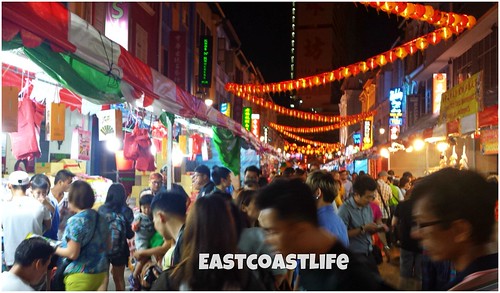
Made a detour to Chinatown to buy some egg tarts for my elders and noticed that Chinatown is gearing up to usher in the Year of the Rooster. The colourful Chinese New Year lantern decorations are up!
Adore the pretty and cute lanterns of the chicken family ..... I will come back one evening to snap their photos .... they probably look better in the night. :D
Needless to say, there are lots of rooster-designed decorations besides the usual festive goodies being sold at the Chinatown shops and street bazaar.
I couldn't resist buying some waxed meats and ingredients for my Lunar New Year Eve Reunion Dinner already. haha....
Ahhhhh..... the must-have for Chinese New Year! Nian Gao (sweet sticky rice cake 年糕 ) to seal the mouth of the Kitchen God so he couldn't badmouth the family when he reports to the Jade Emperor (ruler of Heaven). haha.....
I think I am going to steam my own sticky glutinous rice cake this year. mmm......
Met several artists doing some water colour paintings of the festive street. Despite the number of people milling around them, they kept calm and paint on. hehe....
I will be back to check out the street bazaar after the official light-up on Jan 7 by President Tony Tan Keng Yam. The street bazaar and celebrations will run from Jan 7 to Feb 25.
Official Light-Up and Opening Ceremony 开幕典礼与亮灯仪式
Time : 7 January 2017, 6 pm - 10 pm
Venue : New Bridge Road and Eu Tong Sen Street 新桥路和余东旋街
Chinatown CNY Countdown Party 牛车水春节倒计时晚会
Time :27 January 2017,9.30 pm-12.30 pm
Venue :New Bridge Road and Eu Tong Sen Street 新桥路和余东旋街
10th International Lion Dance Competition 第十届国际醒狮大赛
Time :14 January and 15 January,6.30 pm -10.30 pm
Venue :Carpark at Banda Street (off Sago Lane) Banda Street 停车场
Chingay 2017 Night Fiesta @ Chinatown 妆艺大游行
Time :12 February 2017,7.30 pm- 9.30 pm
Venue :New Bridge Road and Eu Tong Sen Street 新桥路和余东旋街
牛车水农历新年2017庆祝活动
牛车水迎接鸡年 (2017年) 的到来 。。。大街小巷都挂满各种公鸡、母鸡,还有可爱小鸡的手工彩灯。
我喜欢逛牛车水的年货市场, 每年都不会错过。除了买一些新年佳肴和喜庆装饰品, 还可以边吃边逛, 感染新年气氛。
Tuesday, December 20, 2016
Happy Winter Solstice Glutinous Rice Dumpling Balls 冬至快乐吃汤圆 !
Happy Winter Solstice! 冬至快乐!
Despite a busy work week, I have to make some glutinous rice dumpling balls for the elders in the family. It's so convenient these days to use ready ground rice flour, that saved me some time.
I have prepared black sesame paste and the peanut sesame paste a week in advance for the fillings.
I rolled the dumpling balls a day in advance and freeze them. This morning I boiled a sweet ginger soup and dropped the frozen rice dumpling balls into it.
So happy to see that the filling didn't ooze out after boiling them .... pretty round dumpling ball! haha....
吃汤圆咯!
These are rice dumpling balls for the elders, I have to colour the skin of the peanut sesame rice dumplings red (yes, it looks pink in the picture) so that the dish looks auspicious for the elders. It also helps me to differentiate the two fillings.
四岁孙侄子的熊猫汤圆
My little grand nephew wanted Pikachu rice dumpling balls. I didn't have enough time to make them, so I quickly made 4 panda rice dumpling balls.... one for each year of his age. hahaha.... they looked so funny. Glad he enjoyed them and polished off his dessert.
My glutinous rice dumpling balls with an oozing peanut sesame filling
花生芝麻湯圓
My glutinous rice dumpling ball with black sesame filling oozing out.
黑芝麻湯圓
Thursday, May 12, 2016
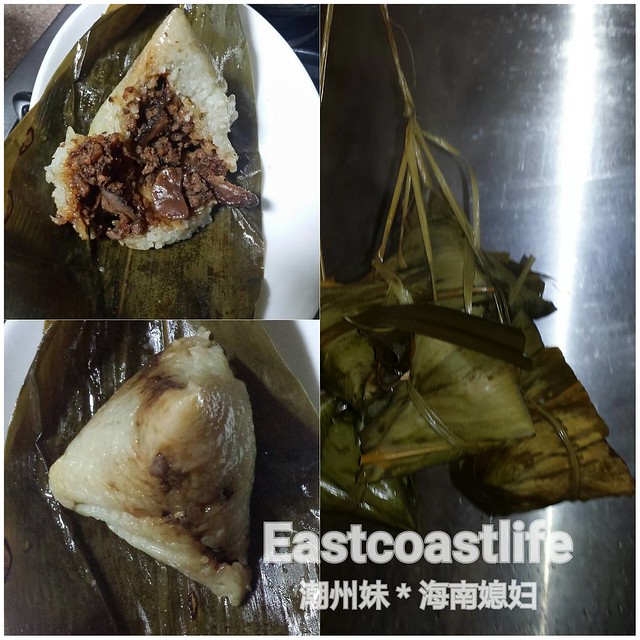
Making Bak Changs (Rice Dumplings) 自己动手包粽子
Preparing for our annual Dragonboat Festival, it's time to make the traditional rice dumplings.
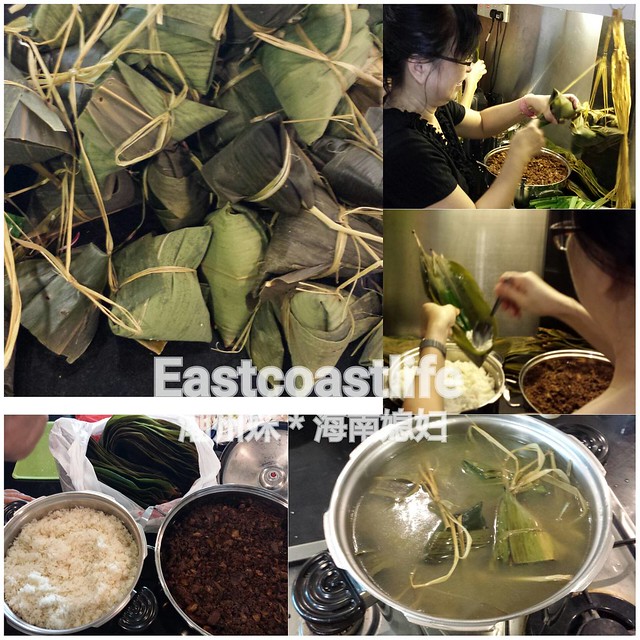
On Wednesday, I spent half a day making nonya pork bak changs and vegetarian bak changs with a group of homemakers who are avid cooks. Those who did not know how to make rice dumplings were eager to learn from the experts.
The night before, a sister cooked the nonya fillings and fried the glutinous rice. The next morning, a few of us wrapped the rice dumplings and boiled them.
There are several ladies who are vegetarians, so we made a meatless peanut and chestnut filling.
We shared the cost of the ingredients, and each of us received 3 rice dumplings. I prefer the fragrant nonya rice dumplings :)
又到了一年一度的端午节, 每年这个时候,吃粽子是传统习俗, 我们几个女生们都会忙于包粽子。今年, 不会包粽子的姐妹们跃跃欲试, 要学包粽子。
包粽子前一天有一个大姐去买粽料、炒料, 糯米也提早一晚泡。第二天早上, 大家手忙不停地洗粽葉、包粽子、煮粽。在包粽子能手的教学下,新手们都学得兴致高昂。虽然粽子包得不太漂亮, 好吃就好!
与这班爱烹饪的发烧友一起包的粽子有娘惹猪肉粽子, 还有素花生和栗子粽子。我还是比较喜欢吃娘惹粽子。
我们共同分摊材料的费用, 每个人都分到3粒粽子。
Wednesday, February 04, 2015
Chinese New Year Bazaar 2015 in Chinatown Singapore - WW
After dinner last evening, my husband and I brought a couple of elderly neighbours to Chinatown to soak in the Lunar New Year festivities and snap photos of the pretty decorations of the Street Light-Up.
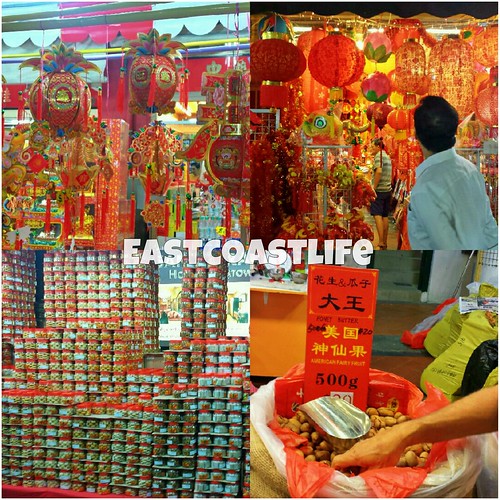
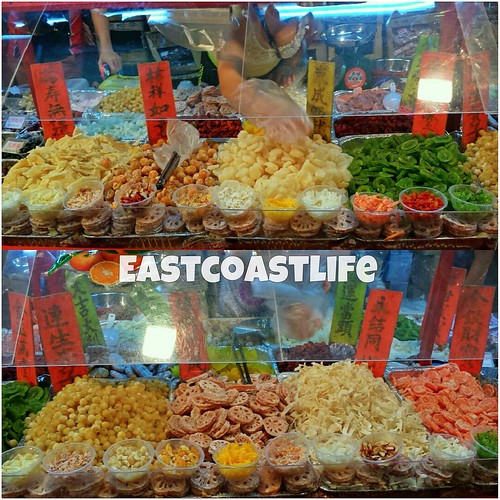
Many traditional goodies from cookies, decorative items, waxed meats and preserved fruits to potted plants and clothing were on sale. My neighbours bought some Chinese New Year delicacies.
As my family is still in mourning, we are not celebrating Chinese New Year this year.... but we bought 20 jars of cookies to distribute to some of the elderly residents in our neighbourhood.
These preserved fruits are a must-have in our Chinese New Year shopping due to their auspicious names and meanings.
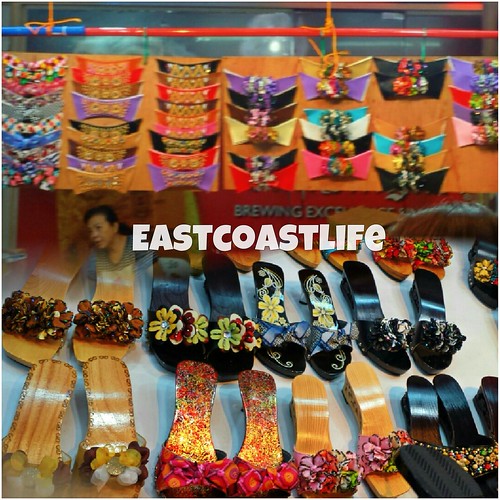
There was a stall selling a modernised version of wooden clogs. Customers could request to custom make a pair of clogs.
Although it was a weekday night, there were lots of people shopping at the bazaar. We had a light supper before going home with or purchases.
Friday, October 24, 2014
Teochew Culture @ Chaoshan - PhotoHunt
Teochew kung-fu tea demonstration 潮州工夫茶
Photohunt theme : Funny/Work tools
I had a glimpse of our fascinating Teochew culture during a trip to Chaozhou Ancient City (潮州古城).
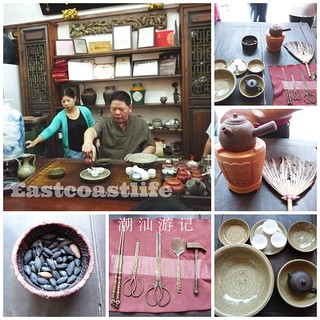
Teochew kung-fu tea is unique to the Chaoshan area, I was served kung-fu tea in every house or shop I visited. Even my hotel room has a tea set for me to use. :)
I watched a Teochew kung-fu tea demonstration by a master craftsman and was awed by the elaborate steps required to prepare a cup of tea. I noted down the traditional technique of brewing tea including instructions on water type, temperature, infusion and grading of tea leaves.
To ensure the tea in every cup is the same temperature and strength, the tea is not poured one cup at a time. Without pausing, it is poured evenly over the cups in a circular motion. The brewing, serving and drinking of kung-fu tea is a fine art which I would love to learn more.
Notice the setup of a clay stove and kettle. Some older folks in Chaoshan still boil water like this. What's really interesting is the fuel they use for the stove - charcoal made from olive pits!
Inside the olive pits are nuts which carry oil substance that give out a unique light aroma when burnt. The master craftsman invited us to have a whiff of the aroma from the olive coal.
The shop sells a variety of tea leaves and basic sets of tea ware for those who want to enjoy a good brew. I already own a tea set and lots of good-grade tea leaves at home so I didn't buy any.
Teochew Hand-pulled teapot 潮州手拉壶
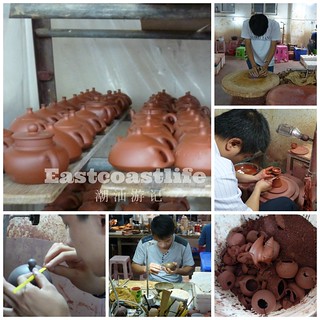
Next we visited a small factory to see the production of Teochew "shou-la" teapot..... i.e. hand pull method on spinning wheel.
Some members bought hand-pulled teapots which were made by a master craftsman and also come with certificates. A hand-pulled small teapot costs RMB 1250 while a medium one costs RMB 8000+.
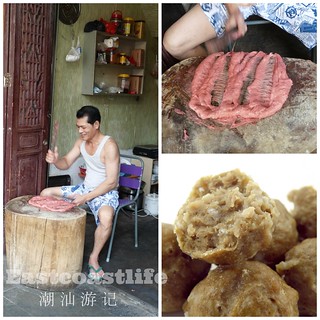
Teochew Hand Hammered beef balls 手捶牛肉丸
One amusing scene that early morning was this hawker who was hammering away at the beef on a huge chopping board. From afar, I thought he was hitting a drum. I was thinking to myself : How funny! His drum didn't produce a sound.
When I saw what he was doing, I couldn't help laughing out loud. He offered a brief introduction without stopping what he was doing.
Hand hammered beef balls are the most common and popular of Teochew snacks. Beef mixed with some tendon is turned into a meat paste as he hammered the mixture using a pair of special wooden round sticks that resemble drumsticks.
The meat paste is then shaped into beef balls and cooked in beef bone soup. I didn't get to taste these beef balls as we were being herded to our next destination .... the downside of a guided group tour. :P
Subscribe to:
Posts (Atom)